
By Mila Puljiz Listeš
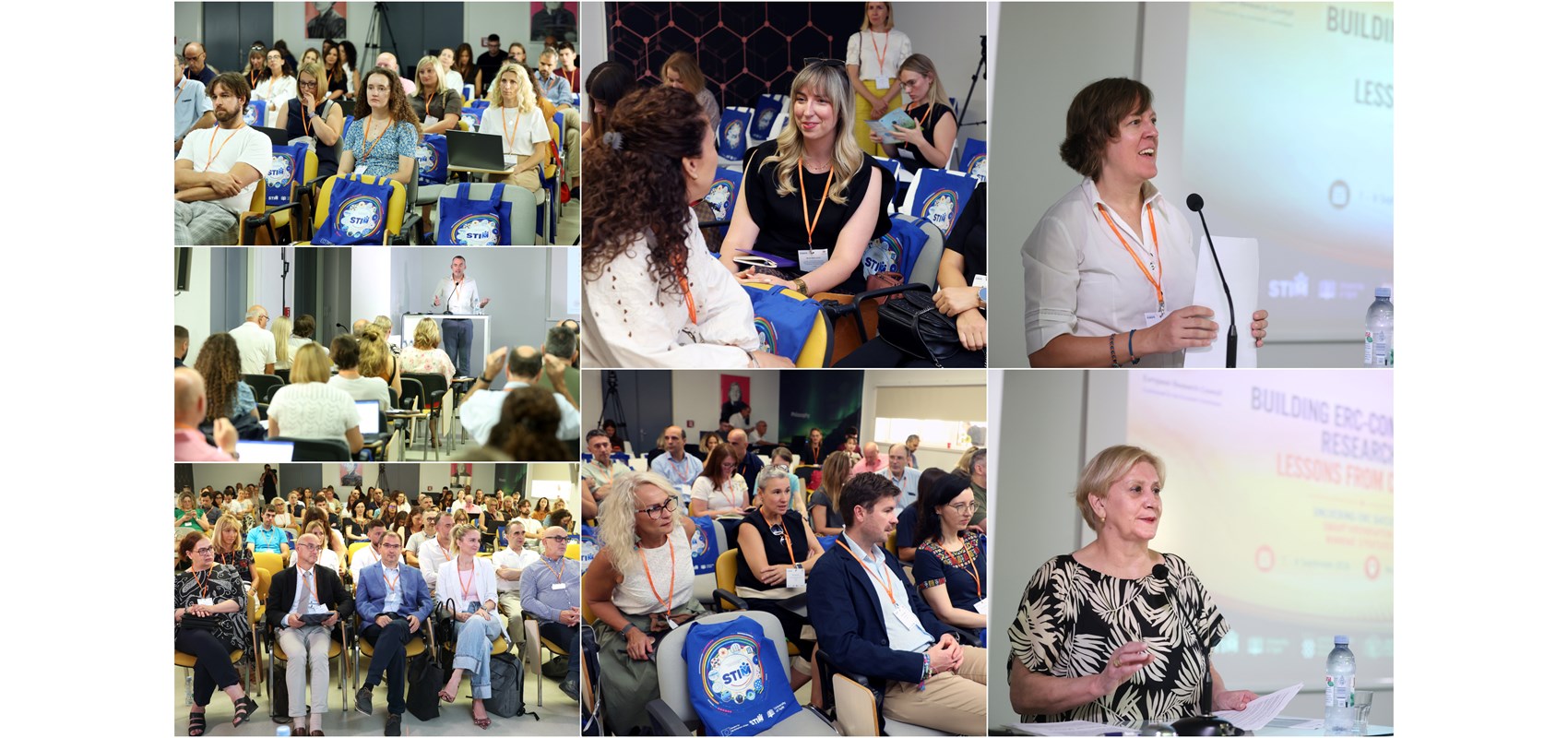
At the Mediterranean Institute for Life Research (MedILS) in Split, on September 7-8, an international workshop titled "Building ERC - Competitive Research: Lessons from Croatia" took place, bringing together around 150 participants from leading scientific institutions in 26 countries. The two-day event was dedicated to sharing experiences and strengthening the competitiveness of researchers and scientific institutions from Croatia, widening countries, and Southeast Europe in applying for European Research Council (ERC) grants.
Research that pushes the boundaries of science
The goal of the workshop was to create space for transfer of knowledge and experiences in preparing and implementing ERC projects, as well as to encourage stronger connections between researchers and institutions from Croatia and the wider region with the European research community. Special attention was given to experiences of researchers who have already successfully gone through the demanding ERC evaluation process, and to opportunities for improving national support systems for future applicants. Although Croatia has achieved great results in attracting ERC funding in recent years, data show that there is significant room for progress.
"These are the most competent projects at the European level, focused on frontier research, or research at the edge of the unknown. The ones that push boundaries of science. The reason we decided to organize this workshop, specifically in Split, is because Croatia, along with a group of other countries called Widening countries, has very low success rates in securing these projects. We believe that we need to work on this, discuss it and see what the problems and solutions are. I would say that it is crucial to have a convincing good idea, to develop the methodology, and convince reviewers that you are the right person to conduct this research," prof. Jadranka Šepić, also a two-time ERC grant recipient, shared.
The international dimension of the event was provided by distinguished representatives of the European research system, including Martin Penny PhD, from the European Research Council Executive Agency (ERCEA), and prof. András Stipsicz PhD from Hungary, a member of the ERC Scientific Council. Along with them, numerous top scientists, ERC ambassadors, and representatives of national support systems from various European countries participated in the workshop.
Photo by Duje Klarić